Last reviewed: 17 June 2026
Reviewer: Sam Chugtai, Managing Director at Flow Office
Design for office culture means making company values visible in the way space works, not only in the way it looks. Company culture isn't created by mission statements alone. The workplace plays a major role in shaping how employees collaborate, communicate, focus and connect with the organisation's values.
As businesses continue to adapt to hybrid working and changing employee expectations, workplace design has become an increasingly important tool for supporting culture, engagement and employee experience.
The CIPD’s organisational culture guidance links positive culture with employee voice, purpose, employer brand and retention, while Microsoft’s hybrid work research shows people want both flexibility and connection.
This guide explains how office design can help bring company values to life and create workplaces that genuinely support the behaviours organisations want to encourage.
Summary
What does design for office culture mean?
How office design influences workplace culture
How to turn company values into workplace design
Start with Culture, not Furniture
Design elements that help express workplace culture
Creating an office culture that feels authentic
How flexibility and choice support culture
Technology, inclusion and wellbeing in culture-led office design
How Much Does Culture-Led Workplace Design Cost?
Common mistakes when designing an office around culture
How to tell if your workplace design reflects your values
Frequently asked questions about office culture and workplace design
What does design for office culture mean?
A simple definition
Design for office culture means using workplace design to reinforce the behaviours and experiences an organisation wants to be known for. If a company values trust, the space should not push everyone into constant visibility. If it values collaboration, the office needs spaces that genuinely support collaboration. If it values inclusion, the design must work for people with different needs, not only the most confident or visible employees.
How and why workplace culture is shaped by physical space
Physical space shapes culture because it sends signals about what is expected, supported and rewarded. The layout influences whether people can speak privately, focus deeply, work with others, join meetings equally and move through the day without friction. That is why culture cannot be designed purely through branding. It is expressed through everyday usability.
Office Design vs Workplace Culture: What's the Difference?
Workplace culture refers to the shared behaviours, values and experiences that shape how people work within an organisation.
Office design is one of the tools used to support and reinforce that culture.
While design cannot create culture on its own, it can strengthen desired behaviours, improve employee experience and help organisations deliver on their stated values.
Why this matters more in hybrid working environments
Hybrid working has made workplace culture more fragile and more intentional. Microsoft’s WorkLab research warns against productivity paranoia and argues for clearer priorities and better support, while its work on flexibility in work styles shows employees want different things from the office. That means culture-led design now has to support autonomy and connection at the same time.
How office design influences workplace culture
The signals your workplace sends
The office tells people what matters. A reception area, meeting suite or breakout space can signal professionalism, openness, creativity or hierarchy long before anyone reads a values page. If the space feels controlled, exclusive or fragmented, those signals land regardless of the language used elsewhere.
How layout influences behaviour
Layout shapes behaviour by making some actions easy and others difficult. A lack of private rooms discourages candid conversations. Poor hybrid rooms make remote participation feel secondary. Too little quiet space suggests that visible busyness matters more than thoughtful work. In this sense, design influences culture by creating daily defaults.
Why design shapes connection, focus and belonging
Culture is experienced through connection, focus and belonging, not only through brand language. The CIPD’s material on employee voice emphasises psychologically safe climates where people feel able to speak up, and that is easier to support in a workplace with the right balance of shared and private settings.
How to turn company values into workplace design
This is where many culture articles stay vague. The useful question is not “What are the company values?” It is “What behaviours should the office make easier?”
Collaboration and openness
If collaboration and openness matter, give teams visible project space, accessible meeting settings and places for spontaneous exchange. Openness should mean easier communication, not constant interruption.
Focus and deep work
If the organisation values quality, thoughtfulness or expertise, it needs quiet rooms, acoustic control and a layout that respects concentrated work.
Flexibility and autonomy
If autonomy matters, people need real choice in where and how they work. Microsoft’s research is useful here because it shows employees want flexibility but do not all want the same workplace experience. A culture of trust is hard to believe if the office gives only one default setting.
Community and belonging
Belonging is supported by social hubs, welcoming arrival points, inclusive shared amenities and spaces where people can connect informally across teams.
Innovation and creativity
Innovation is easier where teams can test ideas, display work in progress and move between focused and collaborative settings without friction.
Integrity and accountability
If integrity and accountability are part of the culture, meeting rooms, project areas and decision-making spaces should support clarity, documentation and responsible discussion rather than performative visibility.
Customer care
If client care matters, that should show in how visitors experience the office, how client meetings are hosted, and how teams can prepare, present and follow up professionally. Internal culture and external experience are closely linked.
Start with culture, not furniture
1. Understand your current culture
Before choosing finishes or furniture, assess the culture that exists now. What do employees say about the office? Where does the current layout support the business well, and where does it create tension?
2. Identify the behaviours you want to encourage
Choose a short list of target behaviours, such as better cross-team collaboration, more confident employee voice, stronger focus or better hybrid participation.
3. Spot gaps between stated values and lived experience
This is often where the real brief appears. A company may say it values flexibility but offer too few meeting rooms and no quiet space. It may say it values openness while leaving remote colleagues outside the main conversation.
4. Involve employees in the process
The HSE’s design guidance supports involving users early, and the CIPD’s work on employee voice reinforces the importance of people shaping matters that affect them at work. Culture-led design becomes more credible when staff experience informs the brief.
Design elements that help express workplace culture
Reception and first impressions
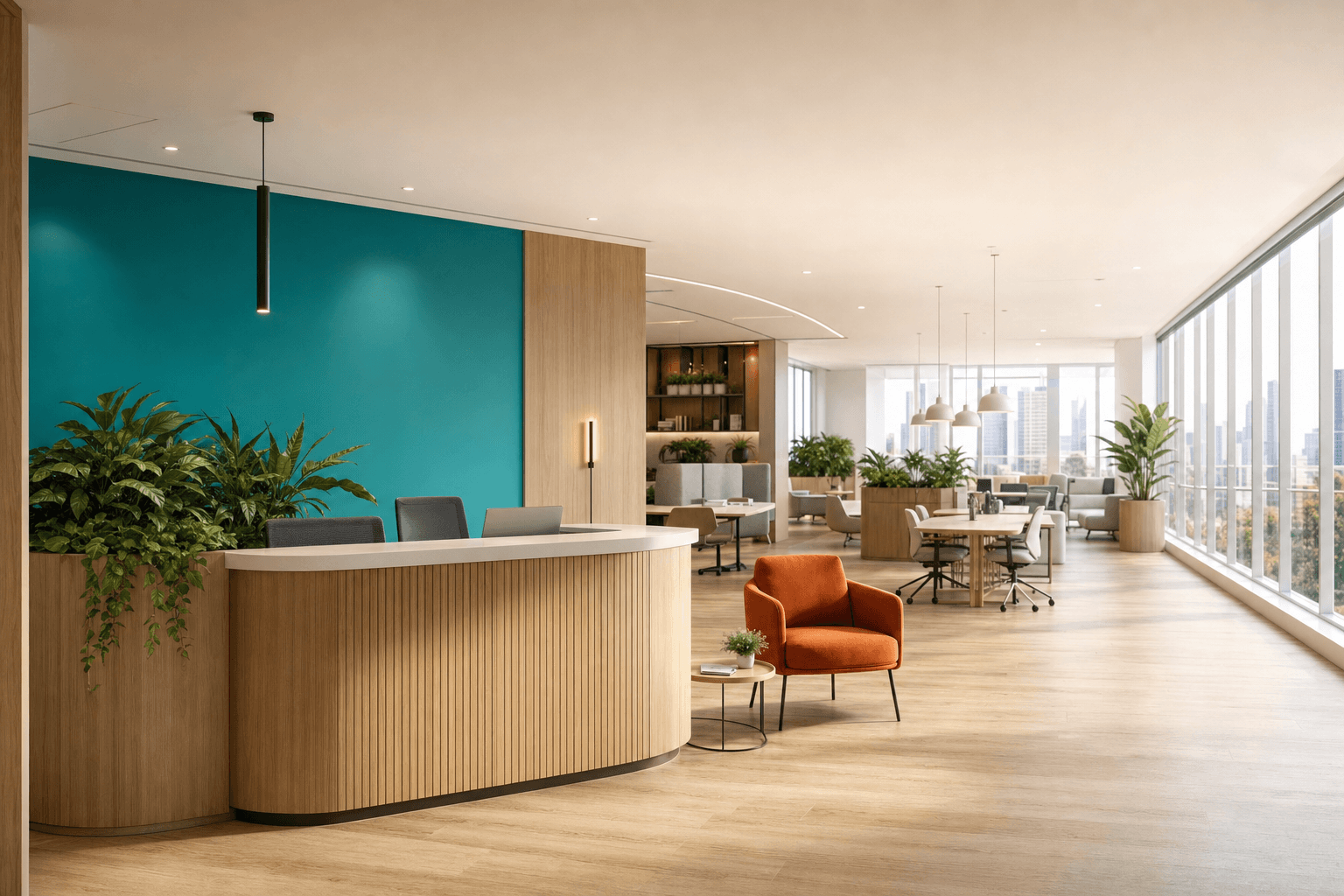
Reception sets the tone. It can communicate warmth, clarity, confidence, creativity or restraint before a visitor meets anyone.
Layout, zoning and sight lines
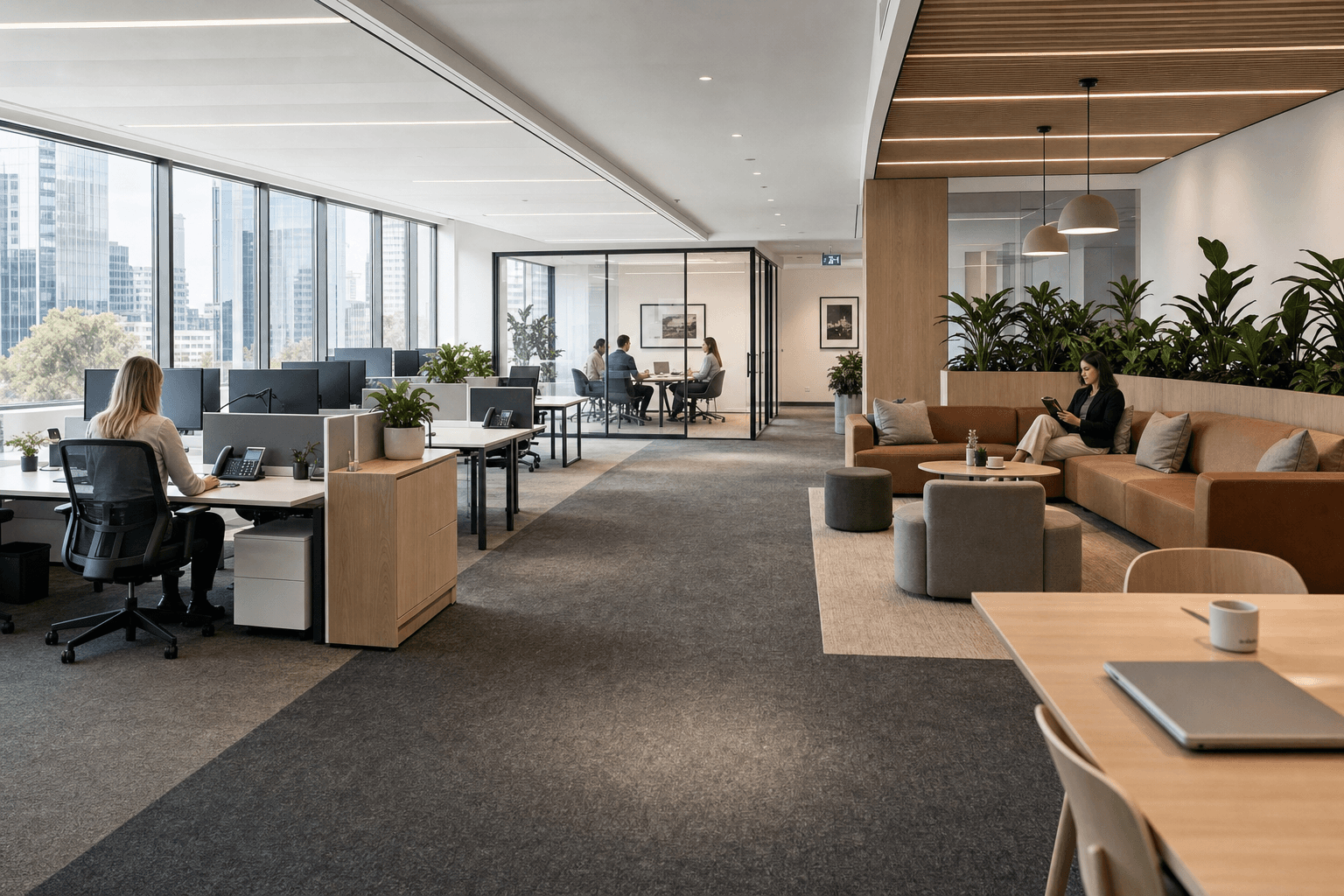
A culture-led layout decides what should feel connected, what should feel calm and where privacy matters. Sight lines affect how open or exposed the space feels.
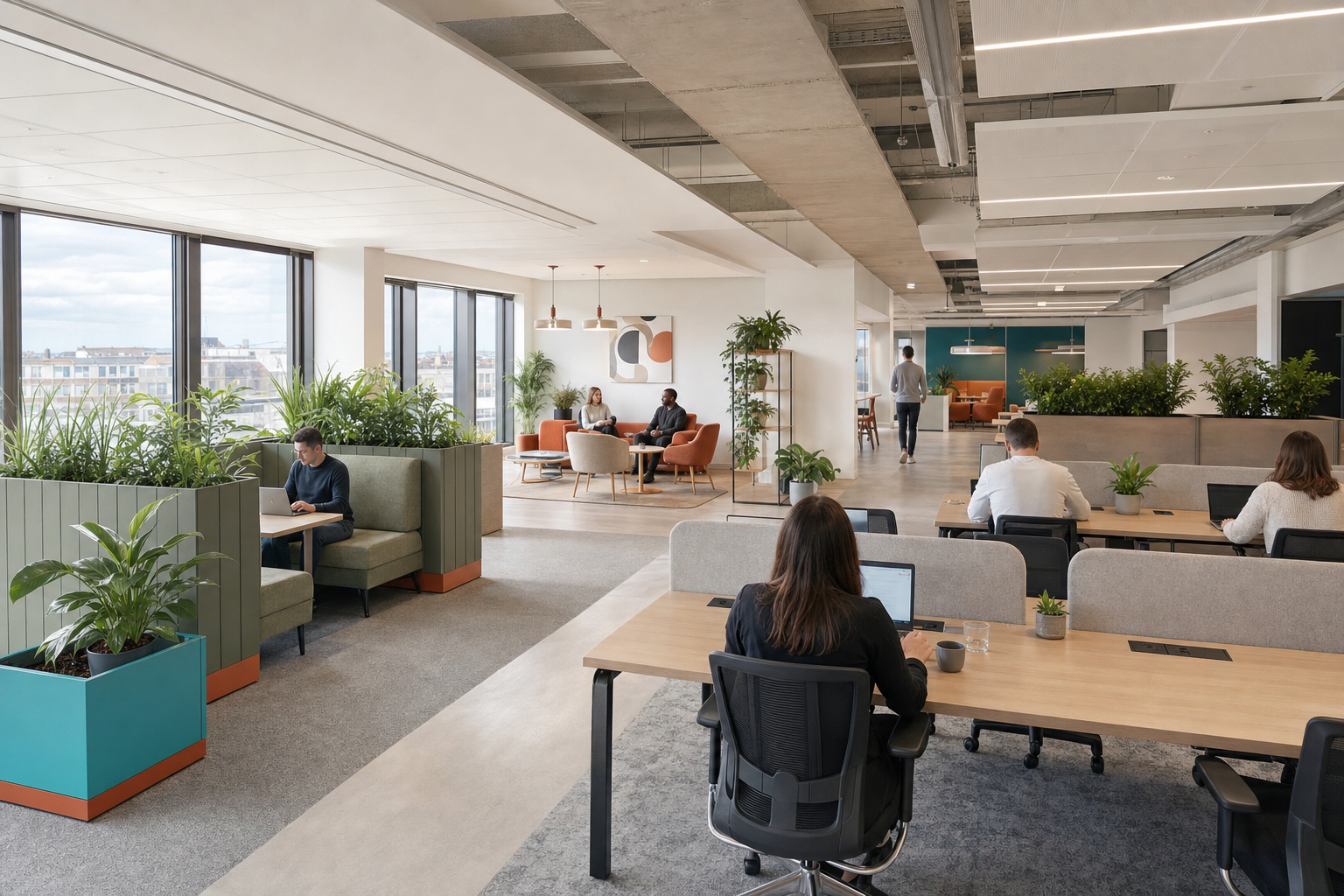
Breakout areas, social hubs and collaboration spaces
These elements support community, mentoring and informal exchange when they are well located and genuinely usable.
Quiet rooms, booths and private settings
Private settings show respect for concentration, sensitive conversations and different sensory needs. They often do more for trust than any branded wall.
Materials, colours and finishes
Materials and finishes should support the intended culture, but they work best when they reinforce a functional strategy that already makes sense.
Brand storytelling through graphics and displays
Brand storytelling can be effective, but only when it reflects a culture people actually experience in the space. Flow Office’s office design service and case studies are useful references for how visual identity and workplace function can be aligned rather than treated as separate tracks.
Creating an office culture that feels authentic
Branding alone is not enough. A company can cover a workplace in value statements and still create a daily experience that contradicts them. Authenticity comes from matching words with space choices, behaviours, leadership habits and operational realities. That is what builds trust and pride over time.
The risk of mismatch is commercial as well as cultural. If the office looks collaborative but makes real collaboration awkward, or looks inclusive but ignores sensory and privacy needs, employees notice quickly. The more ambitious the values language, the more damaging the gap becomes when the experience falls short.
How flexibility and choice support culture
Giving people control over how they work is one of the clearest ways to make culture tangible. Choice in settings signals trust. It also acknowledges that people work differently and do not need the same environment for every task. Microsoft’s hybrid paradox research is helpful here because it shows people want flexibility and connection in different proportions.
Supporting different work styles and personalities also improves inclusion. Some people think best in quieter settings. Others need more movement or more social energy. A culture-led workplace does not force one personality type to dominate. It provides enough spatial variety for different people to contribute well.
Balancing collaborative and focused environments is part of the same point. Choice without quiet space is not real choice. Choice without good hybrid rooms is not real flexibility.
Technology, inclusion and wellbeing in culture-led office design
Technology that supports connection across hybrid teams
Technology influences culture because it determines who can participate well. Microsoft’s guidance on hybrid meetings stresses equal participation, visibility and accessibility. If remote colleagues routinely struggle to join, hear or contribute, the culture message is clear whether intended or not.
Inclusive design for different needs and preferences
Inclusive culture needs inclusive space. The Acas guidance on neurodiversity at work and its page on adjustments for neurodiversity point to practical support such as quiet spaces, reduced distraction, clearer communication and appropriate adjustments. In workplace design terms, that can translate into calmer rooms, lower sensory load, better wayfinding and more choice over where work happens.
Wellbeing features that show people they are valued
Wellbeing is not limited to amenities. It includes daylight, acoustic comfort, thermal comfort, access to privacy and an environment that does not make basic tasks harder than they need to be. Flow Office’ssustainable office design guide usefully connects workplace strategy with wellbeing and quality of life, which is the right direction for culture-led design as well.
How Much Does Culture-Led Workplace Design Cost?
The investment required depends on the scale of change being made, the size of the workplace and whether the project involves a full refurbishment, relocation or targeted workplace improvements.
Many organisations find that relatively small changes to layout, zoning, meeting spaces and employee amenities can have a significant impact on workplace experience and culture.
The most successful projects focus on aligning workplace investment with business goals and employee needs, rather than following workplace trends.
Common mistakes when designing an office around culture
Copying trends instead of reflecting real values is a common mistake. A hospitality-style office, a social staircase or a lounge-heavy plan can work well, but only if it fits the business and the way teams actually work.
Over-branding the space without changing the experience is another risk. Graphics can reinforce culture, but they cannot create it on their own.
Ignoring quiet work and privacy creates a hidden culture problem. It suggests that visibility matters more than concentration or psychological safety.
Forgetting remote and hybrid workers weakens inclusion fast, because it creates one experience for people in the office and another for everyone else.
Not measuring whether the design is working leaves culture-led claims untested. If the business never checks whether the office supports the intended behaviours, the design remains a story rather than a strategy.
How to tell if your workplace design reflects your values
A culture-led office should be judged by what employees experience and what the space makes easy.
| Signal | Working for the culture | Working against the culture |
|---|---|---|
| What employees say about the space | People describe the workplace as useful, supportive and aligned with how they work | People say the space looks impressive but makes core tasks harder |
| How different zones are actually used | Rooms and settings are used largely for the purposes they were designed for | Quiet rooms are overloaded, collaboration areas are avoided, or hybrid rooms are bypassed |
| Whether the office supports the behaviours you want | The layout clearly helps focus, connection, inclusion or client care | Staff rely on workarounds to achieve basic behaviours the values promise |
| Signs the design needs to evolve | Feedback and usage data are reviewed and acted on | Problems are visible but treated as individual complaints rather than design issues |
The CIPD’s organisational culture material is a good reminder that culture is tied to voice, purpose and retention. If the workplace weakens those outcomes, it is not reflecting the values as well as it could.
Create a Workplace That Reflects Your Values
Whether you're planning a new office, redesigning an existing space or reviewing your workplace strategy, our team can help create an environment that supports your culture and business objectives.
Contact Flow Office today to discuss your project.
Frequently asked questions about office culture and workplace design
Can office design really change company culture?
Office design cannot replace leadership, policy or management, but it can strongly reinforce or undermine culture by shaping daily behaviours, expectations and interactions.
How do you make an office reflect company values?
Translate each value into a behaviour, then into a spatial response. If the value is collaboration, create better collaborative settings. If it is focus, protect quiet work. For inclusion, design for choice and varied needs.
What is the difference between branding and culture-led design?
Branding expresses identity visually. Culture-led design expresses values through how the workplace actually functions. The strongest projects align the two, but they are not the same thing.
How do you design for both collaboration and focus?
Use zoning, acoustic control, varied room types and clear purpose for each setting. Collaboration improves when focused work is also protected.
What should be included in a culture-led office design strategy?
A strong strategy usually includes cultural discovery, employee input, behavioural priorities, layout principles, hybrid technology, inclusion and wellbeing considerations, and a plan for measuring whether the design works after occupation.