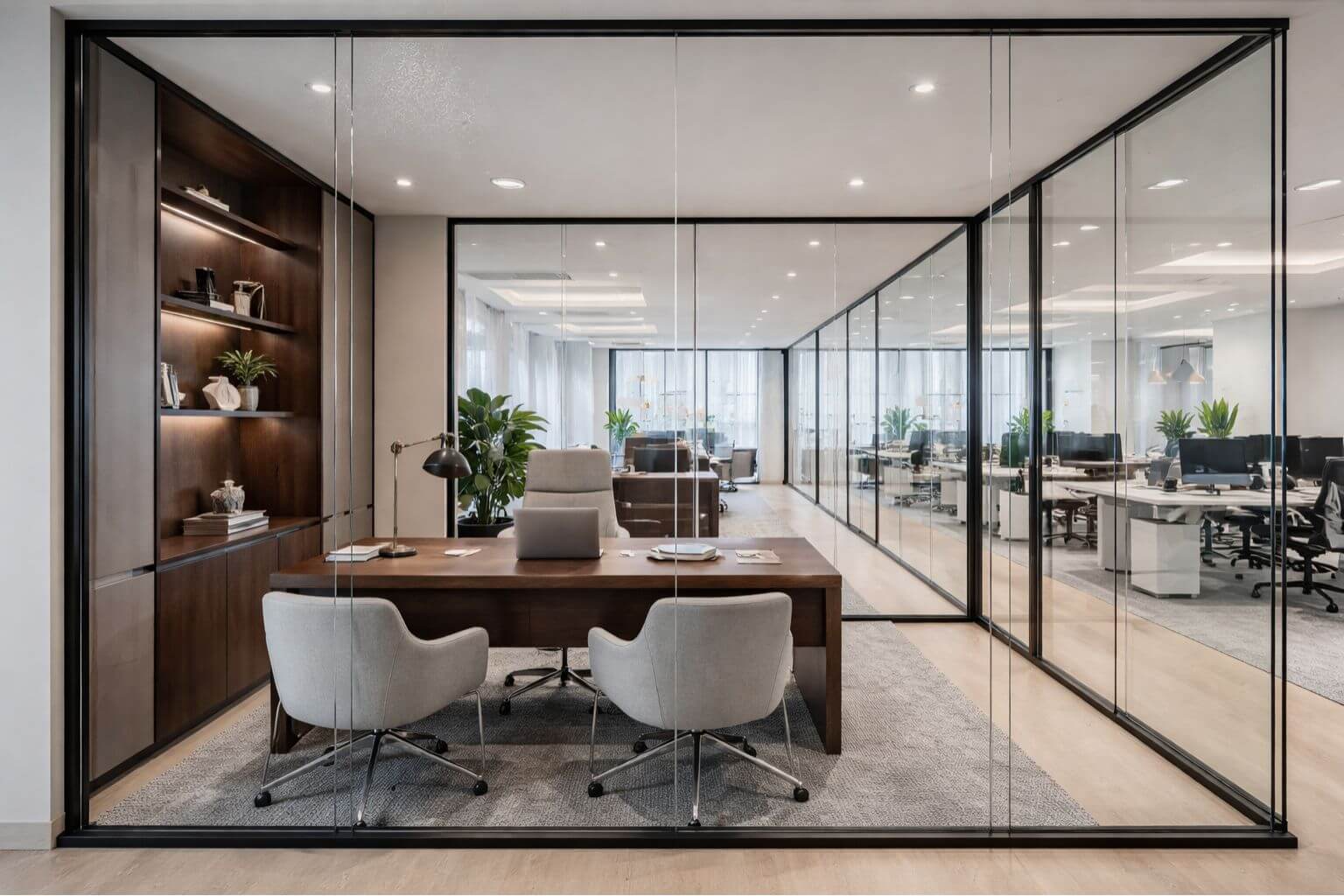
Choosing between a new Grade A office space and a well-located but ageing Grade B building is rarely a simple property decision. It is usually a business decision disguised as a lease. Leaders are weighing rent against recruitment, client perception against cost discipline, and ESG ambition against the practical realities of supply. That tension is sharper in London, where Grade A availability remains tight, with vacancy cited at just 5.4%, while demand continues to favour new and comprehensively refurbished stock. In one recent London comparison, City of London rents were put at £75 to £82.50 per sq ft for Grade A and £67.50 to £75 for Grade B, and wider market data shows occupiers are still moving quickly for the best space.
For occupiers, that matters because the office is doing more work than it did a decade ago. It now has to support hybrid patterns, help attract talent, hold up under ESG scrutiny, and reassure clients that the business is credible, stable and forward-looking. This guide explains what Grade A office means in practice, how office grading works, where Grade B office space still makes sense, and when an upgrade to Grade A standard is commercially justified.
Summary
- Grade A office space definition
- Key Features of Grade A
- Grade A vs Grade B offices
- Benefits of a Grade A office space
- Drawbacks to consider
- Is Grade A refurbishment right for your business?
- Design tips
What is Grade A office space?
Grade A office space is the market’s shorthand for the highest-quality office accommodation in a given location. In practical terms, that usually means a new or comprehensively refurbished building in a prime or core business area, with strong infrastructure, better amenities, and sustainability credentials that meet current occupier expectations. The important nuance is that Grade A is not a legal standard or a formally regulated certification. It is an industry label shaped by market consensus.
That lack of formal definition matters more than it used to. The British Council for Offices said in 2025 that the UK’s current grading system is no longer fit for purpose, with fewer than 3% of respondents supporting the old framework and 96.5% rating sustainability certifications as essential to office quality. In other words, a building can still be described as Grade A in marketing material, but serious occupiers increasingly look past the label to the evidence underneath it. If you see the term Class A office space in US-facing material, it generally means the same broad concept: top-tier, premium office accommodation.
For decision-makers, the most useful way to read the label is this: Grade A is a shorthand for best-in-market quality, but the real test is whether the building performs for your people, operations and ESG reporting requirements. That is why some older Grade B assets can still become highly competitive through refurbishment, while some nominally Grade A buildings can feel outdated if they have not kept pace with today’s standards.
Key features of Grade A office space
Prime location and strong connectivity
A Grade A office is usually in a prime or core commercial location with strong public transport access and easy reach of amenities that support the working day. That still matters because even in a hybrid model, commutability shapes attendance patterns, recruitment reach and client convenience. Prime location also tends to support stronger brand positioning, especially for businesses whose teams or customers still spend meaningful time in person.
Higher-spec building performance
The physical standard is normally what people notice first. Grade A offices tend to offer better floor-to-ceiling heights, stronger natural light, efficient floor plans, upgraded cores, modern lifts, better HVAC, cleaner servicing strategies and infrastructure that supports contemporary digital working. Increasingly, that also includes building management systems, stronger connectivity, touchless access, smarter controls and end-of-trip facilities such as showers and cycle storage.
Sustainability and occupier experience
This is the area that has changed most. A decade ago, Grade A often meant good finishes and air conditioning. Today, occupiers expect stronger environmental performance, better indoor air quality, wellness considerations and evidence that the building will stand up to future regulation. BREEAM assesses sustainability across factors such as energy, water, health and wellbeing, resources and resilience, while NABERS UK focuses on the actual energy use of offices over time. That shift is important because the market is moving away from treating paper credentials as enough on their own.
Grade A office vs Grade B office space
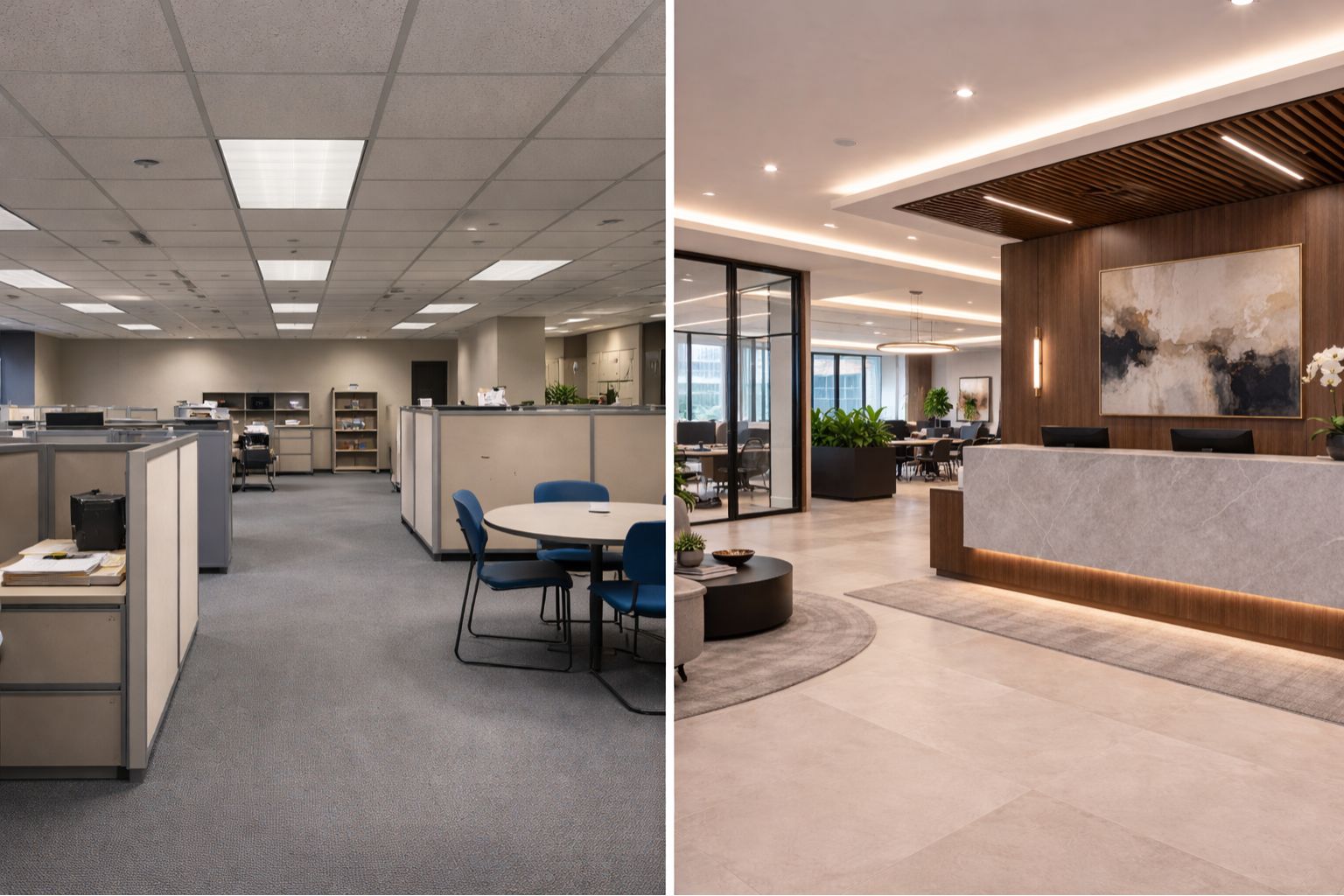
A useful way to think about office grading is that Grade A buys you less compromise. Grade B office space can still be perfectly serviceable, and in some cases strategically smart, but it usually comes with more limitations in building services, amenities, flexibility or ESG readiness.
| Factor | Grade A office space | Grade B office space |
|---|---|---|
| Building profile | New or newly refurbished | Older, possibly historic. |
| Location | Prime or core commercial area | Secondary location or less dominant building |
| Building services | Modern HVAC, lifts, digital infrastructure, stronger cores | Adequate but often dated services and infrastructure |
| Sustainability | More likely to carry recognised credentials and better energy performance | More variable, often needs upgrade work |
| Occupier experience | Stronger shared spaces, amenities and client-facing presence | Practical, lower-frills accommodation |
| Rental tone | Premium | Lower headline rent, but often with trade-offs |
Public Birmingham evidence suggests a meaningful rent premium for top-tier space, although the market is less transparent than London on formal Grade A versus Grade B averages. Published comparisons have put Birmingham CBD Grade A rents at around £40 to £41 per sq ft versus £25 to £26 for second-hand space, while more recent market reports show prime rents rising to £46 per sq ft by the end of 2025.
The takeaway is that Grade B is not automatically poor space, and Grade A is not necessarily right for every occupier. The real question is whether the premium attached to Grade A translates into business value.
Benefits of Grade A office space
Stronger talent attraction and client confidence
The office now plays a bigger signalling role than many lease appraisals capture. Recent research has even begun to frame this as “office peacocking”, meaning the deliberate enhancement of workplace aesthetics and amenities to influence employee behaviour. The underlying business logic is familiar to HR and leadership teams: people read a workplace as a signal of how a company operates. A recent Gensler survey found that 19% of employees would be embarrassed to show their current work.
That does not mean every business needs a glossy flagship office. It does mean the workplace has reputational weight. Grade A office space can support employer brand, improve first impressions for clients and candidates, and give leaders a more convincing physical backdrop for culture and collaboration.
Better alignment with ESG and compliance pressures
For many occupiers, the ESG case is now one of the strongest reasons to prioritise Grade A or Grade A-standard retrofit. BREEAM remains a key sustainability framework, and sector commentary still notes that around 70% of UK local authorities require or encourage BREEAM certification in planning policy.
There is also a growing distinction between theoretical compliance and operational accountability. EPCs still rate buildings from A to G and remain part of regulation, with the current legal minimum for privately rented commercial property at E in England and Wales. But the live market direction is towards tighter standards, and CBRE’s 2025 analysis points to a likely commercial EPC B requirement after 2030, not a confirmed 2028 deadline. In parallel, NABERS UK measures actual energy use, which is why it is becoming more influential.
More resilient long-term performance
Better buildings tend to work harder operationally. They can support smaller but higher-quality footprints, help reduce churn, improve comfort and reduce the risk of needing major corrective work mid-lease.
That resilience matters because the office is no longer judged just on occupancy efficiency. It is judged on whether it supports focus, collaboration, social connection and adaptability. In that context, Grade A office space is often better positioned to remain relevant.
Drawbacks to consider, and how to mitigate them
Higher rent and fit-out expectations
The clearest drawback is cost. Grade A rents are higher, incentives can tighten when supply is limited, and the base build often creates pressure to finish the workspace to a similarly high standard. The mitigation is to assess total value, not just headline rent. Many occupiers offset a higher rate by taking a smaller footprint.
Scarcity can reduce choice
Limited availability means the best buildings often move quickly, especially in core markets. That can compress decision timelines and make negotiation harder. The mitigation is to start earlier, define non-negotiables clearly, and include strong retrofitted buildings in the search rather than assuming only new-build stock will qualify.
The label can hide real differences
Because Grade A is not a rigid, regulated standard, two buildings described the same way can perform very differently. The mitigation is straightforward: ask for evidence. Look at the EPC, BREEAM status, NABERS UK pathway or rating, HVAC strategy, amenity mix, and the condition of the shared spaces before making a decision.
How to decide whether Grade A is right for you
Grade A is most likely to make sense if your office needs to do several jobs at once: attract and retain talent, host clients regularly, support a hybrid model with purposeful in-person time, and stand up to rising ESG scrutiny. It is also more compelling if your existing workplace is actively holding back recruitment, culture and client retention.
A Grade B strategy may still be the better route if location is excellent, the structure is sound, and you can achieve a Grade A-standard experience through targeted refurbishment rather than a premium new lease. That route is becoming more credible as the market pays more attention to retrofit quality, sustainability and actual building performance, rather than age alone.
A simple test is to ask three questions:
- Does the workplace need to help you win people?
- Does it need to help you hit sustainability objectives?
- Does it need to reassure clients, investors or partners when they walk through the door?
The more often the answer is yes, the stronger the case for Grade A.
Expert design tips before you commit
Assess operational performance, not brochure performance.
An EPC is useful, but it is still a modelled rating. Ask how the building performs in use, whether NABERS UK or BREEAM is in place or planned, and how the landlord is evidencing actual energy performance over time. That gives a much clearer view of whether the building is future-proof.
Take retrofit seriously
Especially if you already occupy a well-located Grade B building, retrofitting to modernise is becoming more standardised. Many UK cities are increasingly favouring reuse in their planning directions where it is possible. Retrofit schemes are likely to result in less upfront embodied carbon than new-build schemes. For many occupiers, refurbishing a good shell is the most balanced route to quality office space.
Brief for work patterns, not just desk counts.
Grade A value is wasted if the fit-out simply recreates an old layout in a better building. Use space utilisation data, team interviews and workflow mapping to decide how much space should support focus, collaboration, learning, social interaction and client hosting.
Price the whole occupancy model.
Rent, service charges, dilapidations risk, ESG reporting needs, Cat B fit-out scope, furniture reuse, landlord works and future adaptability all affect whether a move is genuinely worth it.
Does it Serve Your Business?
A Grade A office should never be chosen just because the market says it is premium. You should choose the space that supports a measurable business objective better than the alternatives. For some organisations, that will mean taking a new Grade A lease. For others, it will mean retrofitting a strong Grade B asset to Grade A standard.
The useful next step is a clearer brief: what the space needs to do, what standards it must meet, and where the premium will genuinely pay back. To discuss your design brief, contact Flow Office on 01922 453 488 or email sales@flowoffice.co.uk.